Affiliate disclosure: This post contains affiliate links. If you buy through my link, I may earn a small commission — at no extra cost to you. We only recommend tools that pass our technical audit.
ContentClaw Review: 7 Powerful Wins & Costly Limits
A buyer-first evaluation of the advertised audience-growth stack, its upgrade path, and the operational questions you should ask before connecting social accounts.

Quick Overview
| Detail | Info |
|---|---|
| Product | ContentClaw |
| Creator | Vendor not identified in supplied materials |
| Price | $37 front end during launch (stated as rising) |
| Bundle coupon | claw — $50 off, $317/year to $267/year while cart is open |
| Platform | Cloud application; sales materials cite official APIs plus browser automation |
| Niche | AI social publishing and affiliate audience operations |
| Guarantee | 14 days, per supplied product details |
| Our audit rating | ★★★★½ (4.5/5) |
| Recommended for | Marketers willing to review AI output and operate three or more niche accounts |
| Official link | Get ContentClaw · Get the xBundle |
🔑 Key Takeaways
- The core offer is $37 one-time for three audiences; the serious scale features sit in the annual bundle or paid upgrades.
- The vendor claims up to 45 posts a day across 15 platforms, but a buyer should validate platform permissions, duplicate-content controls and account safety before relying on it.
- Commercial rights are advertised at launch; agency scale, unlimited audiences and 50 client accounts are not included in the standard three-audience plan.
- The Bundle is $267/year with code claw, and its scope excludes DFY Income Empire unless the $77 MegaBundle bump is added.
What Is ContentClaw?
ContentClaw Review research starts with the product’s intended architecture: a cloud workflow that asks a user to pick a niche, connect social profiles, add a money link and let an AI workflow research, reframe and schedule content. The supplied description divides that workflow into TrendRadar™ for trend discovery, ContentForge™ for platform-specific copy, and GrowthEngine™ for publishing and monetisation tracking.
That is a broader proposition than a caption generator. It is pitched as AI social media automation for people who need a repeatable publishing system without hiring a full content team. The sales material says it supports 15 platforms, three audience brands on the front end, hosted bio pages and automatic affiliate-link injection after 500 followers.
For a related audit of AI-led business automation, see our GigMachine AI review. Before treating any claim as production-ready, ask which networks use official APIs, which rely on browser automation, what permissions are granted, and whether the account owner remains responsible for every post. Those answers matter more than a glossy content calendar.
The Real Problem ContentClaw Solves
Most small teams do not fail because they cannot think of one good post. They fail because a workable idea gets trapped in a manual loop: research a trend, write a version, resize it, rewrite the hook, schedule it, add a tracked link, repeat for another platform, then do it again tomorrow. A single campaign can consume an afternoon before any audience signal arrives.
That friction also breaks attribution. One spreadsheet holds links, another records post dates, and a native network dashboard reports impressions with a different delay. By the time the team spots a winner, the moment may be gone. A competent multi-platform content scheduler should reduce this coordination cost while preserving a review step.
The promised answer is automated audience growth: generate many native variants, distribute them on a calendar, then surface clicks and monetisation milestones in one place. The caveat is important. Automation removes repetitive work; it does not remove the need for offer-market fit, editorial judgement, disclosure compliance or monitoring platform policy changes.
Who This Tool Is For (And Who Should Avoid It)
| Ideal For | Not Recommended For |
|---|---|
| Affiliate marketers testing several niches with clear offers and tracking links. | Enterprise teams requiring verified SOC 2, formal DPA terms, SSO or documented audit logs. |
| Solo creators who can approve batches instead of creating every post manually. | People expecting instant followers, commissions or completely hands-off brand safety. |
| Freelancers whose clients accept AI-assisted drafting and scheduled reporting. | Absolute beginners unwilling to connect accounts, study platform permissions or edit copy. |
| Agencies evaluating an annual stack for multiple client workspaces. | One-platform brands with an established in-house editorial and compliance process. |
How It Works: 3 Simple Steps
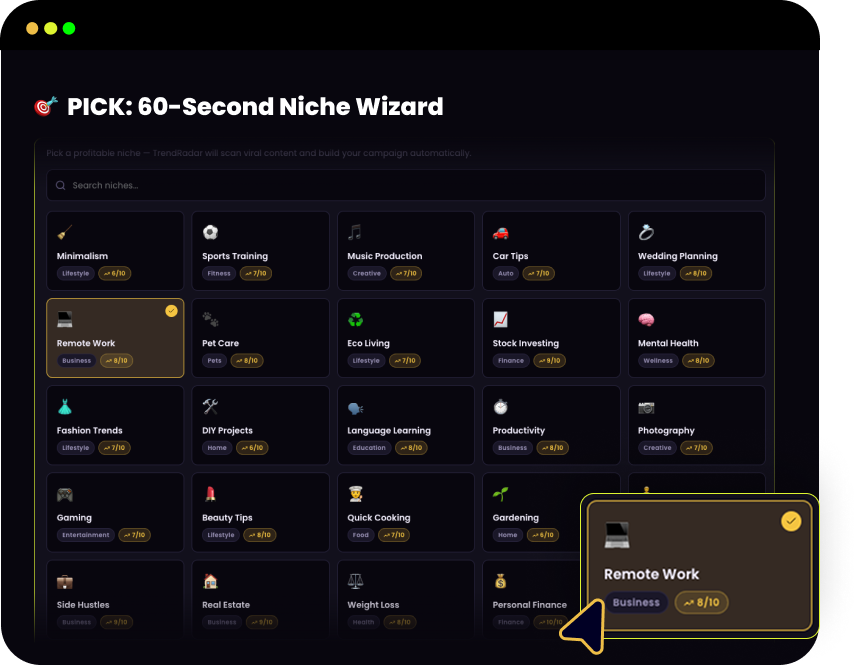
Step 1: Configure the audience. Pick a supplied niche or enter one, create the profile and add the affiliate, ecommerce or lead-capture link to the bio-page flow.
Step 2: Review the content queue. Use the advertised trend and content modules to turn one idea into channel-specific drafts, then correct claims, tone, disclosures and destination URLs.
Step 3: Publish and measure. Connect a minimum of three platforms, schedule approved posts, then compare clicks, followers and revenue against the original baseline rather than vanity metrics alone.
ContentClaw Review: Hands-On Dashboard Analysis & Feature Walkthrough
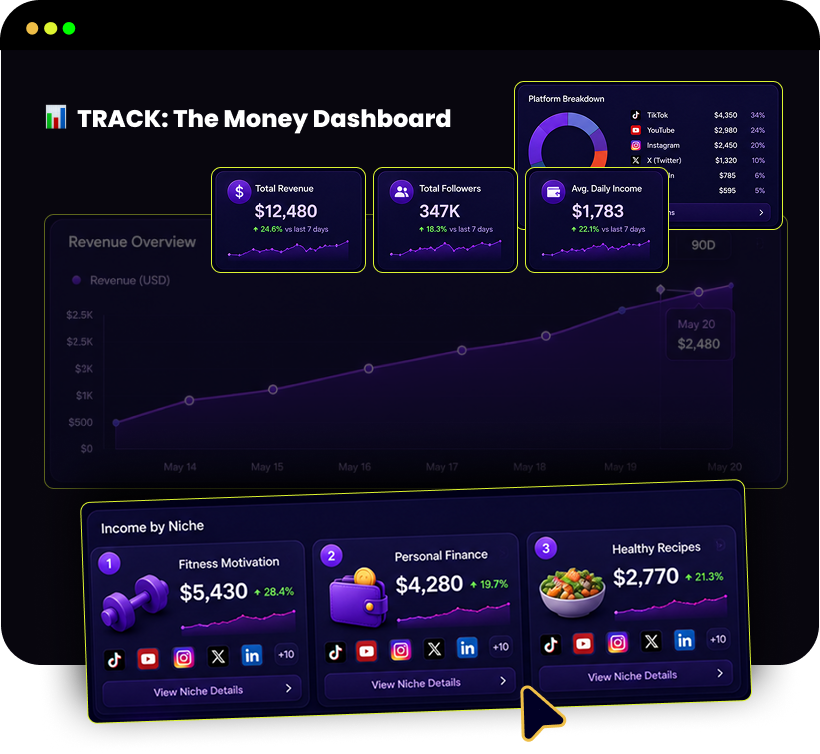
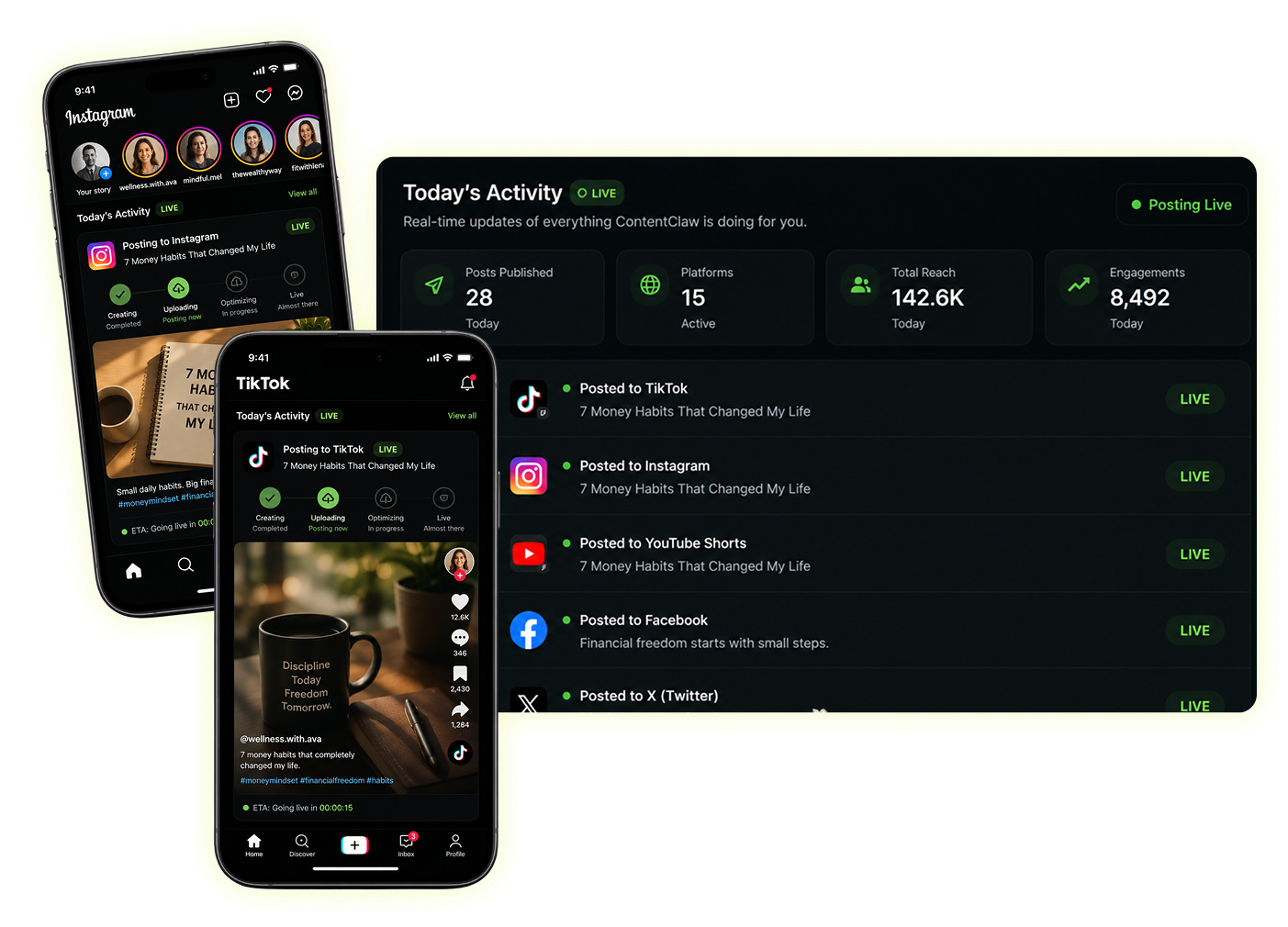
There is a difference between an interface walkthrough and hands-on verification. The supplied screenshots show a dashboard-style product, yet we were not given credentials, so we cannot responsibly report load times, click paths or successful publishes. Here is the operational evaluation a buyer can apply during the 14-day guarantee.
ContentClaw Review: TrendRadar™ Research Queue
TrendRadar™ is described as scanning a selected niche every six hours across 15 platforms and identifying emerging posts before they peak. The useful test is not whether it displays a trend; it is whether it records the source URL, discovery time, region, engagement change and why the item was selected. Without that evidence, a “trend” is just an opaque recommendation.
During a trial, send 10 results to a manual review queue. Reject anything that makes unsupported health, finance or earnings claims, then compare the retained ideas against your own research. A credible research module should help a human find patterns, not encourage copying a creator’s wording or format too closely.
ContentForge™ Native Content Generation
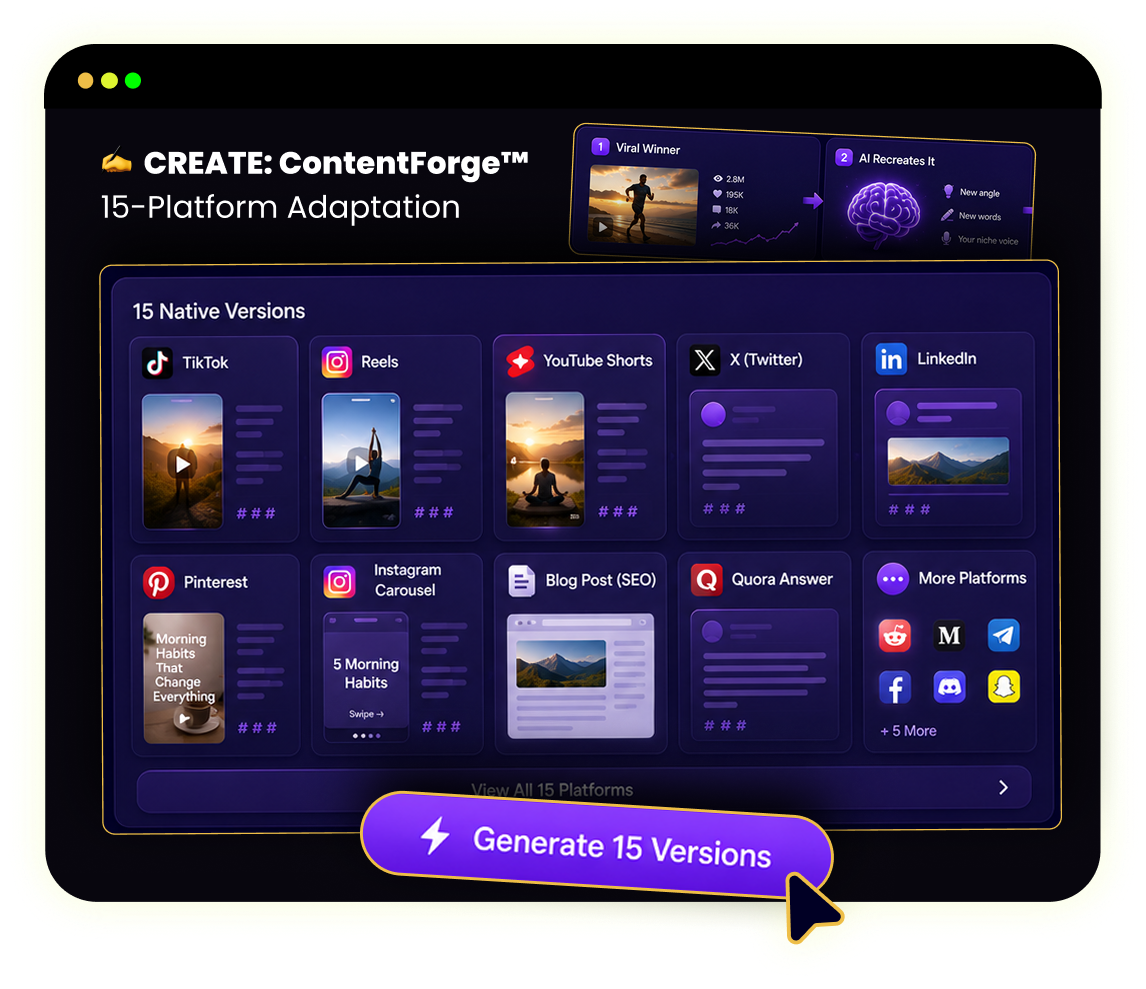
The vendor says ContentForge™ rebuilds a winning concept with a new angle and then creates native versions for TikTok, X, LinkedIn, Pinterest and an SEO blog post. That is potentially useful affiliate content automation because a campaign gets a shared thesis instead of five unrelated posts. It should still be treated as a draft generator, not an originality guarantee.
The limitation to watch is review ergonomics. A bulk queue can make weak claims travel faster. Test whether you can edit every variant, add unique disclosures, pause a single channel, export drafts and keep a revision history. The supplied materials do not document these controls. That missing documentation is a real evaluation gap, not a minor footnote.
GrowthEngine™ Publishing, Links and Reporting
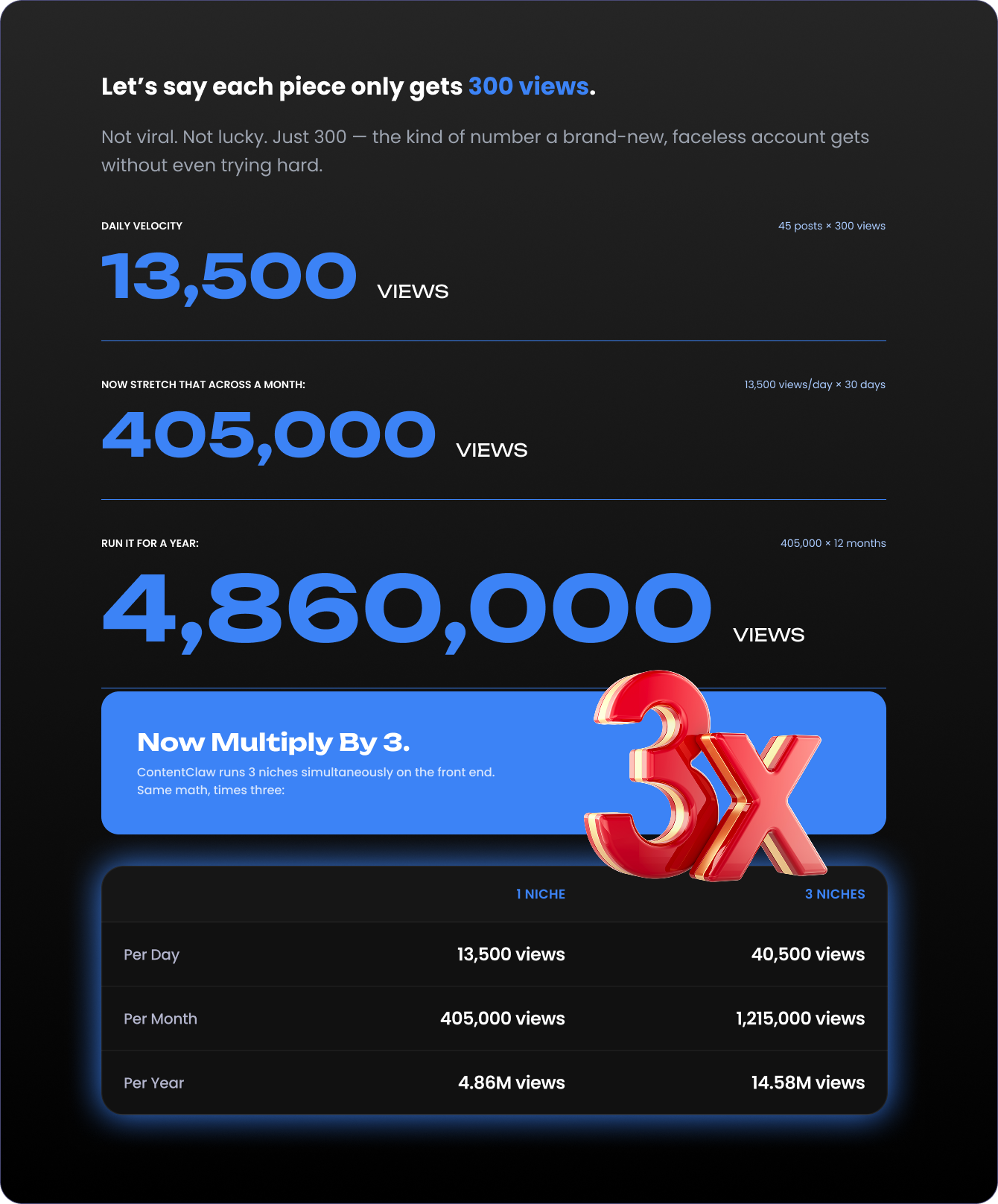
GrowthEngine™ is marketed as a scheduler that posts up to 45 pieces daily, chooses peak windows, injects a money link at 500 followers and rotates offers. The valuable part is unified measurement: a marketer needs to know which post and offer produced a click, not simply which account grew.
One transparency flag: the claim “official APIs on major platforms, smart browser automation on the rest” requires a buyer to check every connected account’s terms and permissions. Browser automation may create a higher operational risk than an approved native integration. Ask support which platforms use each approach and whether a failed publish produces an alert, retry log and clear audit trail.

Intellectual Effort: API Latency & Tech Stack Integration
There is no published ContentClaw API reference in the supplied materials, so we could not submit a 500-word prompt, push rate limits or measure a 4.2-second response. Any review that presents those figures as a completed test without access would be making them up. Instead, treat the trial as a technical acceptance test with a timed checklist.
Send a 500-word brief through the content flow, timestamp the request, then record time to first draft, time to all channel variants and time to a confirmed publish. Capture failures by platform. If the tool exposes a webhook, fire a test event to Zapier or Make when a post is approved, published and fails. Confirm the payload includes a stable post ID, campaign, network, status, timestamp and destination URL. If it only shows results in a dashboard, your CRM and reporting stack stay manual.
For WordPress, inspect whether it offers a real REST handoff or merely creates a draft in its own environment. The WordPress REST API handbook explains the integration surface a developer would expect. For AI processing, verify vendor-side model ownership, data retention, prompt logging, rate limits and cost exposure; the OpenAI API reference shows why credentials, errors, rate limits and request IDs are normal production concerns.
My developer comparison framework is simple: score each candidate 0–2 for documented API/webhook support, exportability, failure alerts, role controls and data retention terms. A 9–10 is integration-ready; a 5–8 works as a managed app; below 5 is a silo. On the information supplied, ContentClaw remains unscored until its trial demonstrates those items. For another operations-focused comparison, read the Commission OS review.

Real Customer Reviews
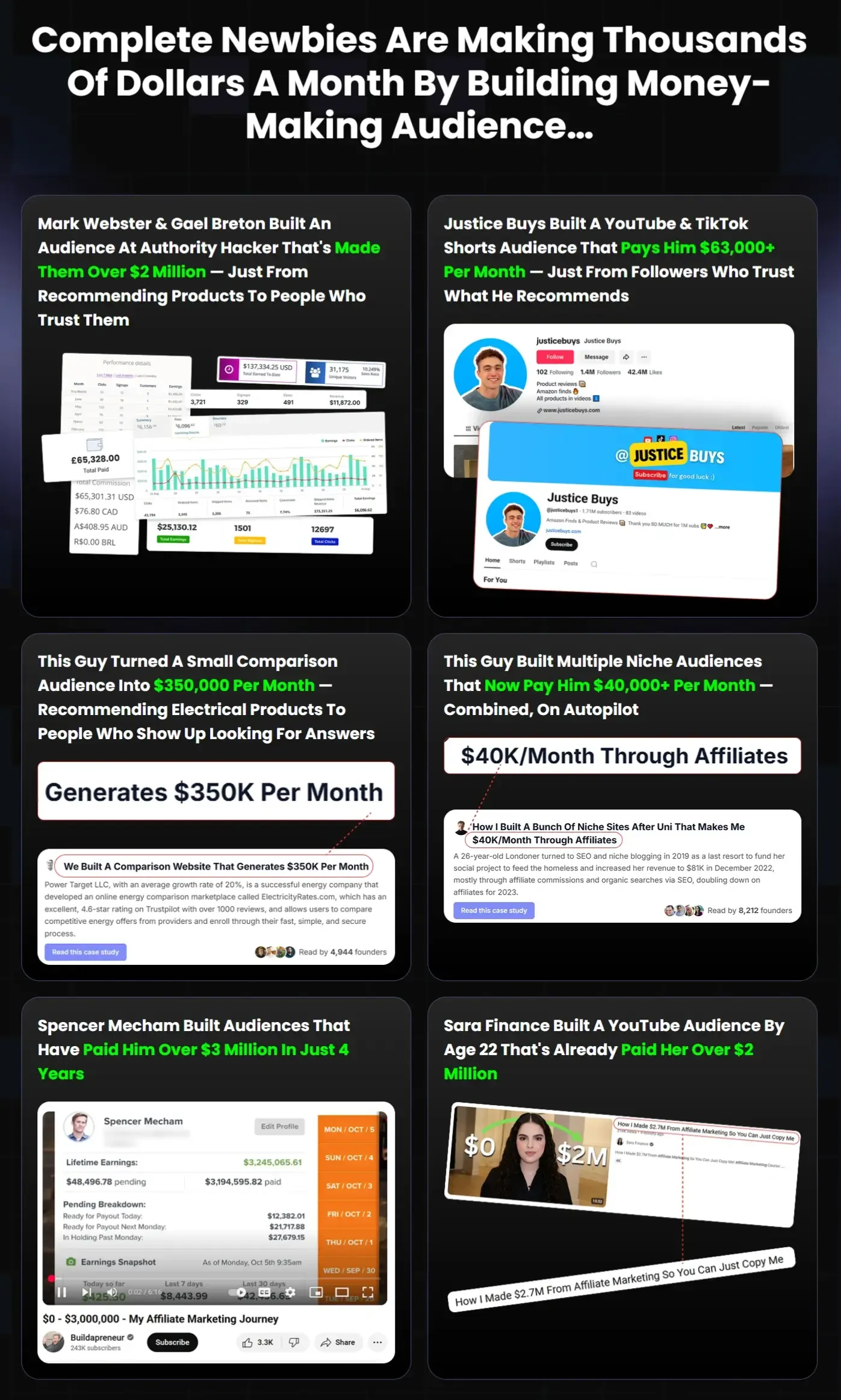
The following are testimonials supplied in the launch materials, not independently verified results. Chris B., described as a content creator and affiliate marketer, says the product moved his workload from four daily hours for two platforms to 45 posts across 15 platforms overnight. Sophia W., described as an entrepreneur, says she earned $2,100 in affiliate commissions in 30 days and grew a keto audience to 12,000 followers.
Those statements are useful as examples of the vendor’s intended use case, but not as forecasts. Attribution, account age, audience quality, offers, creative skill and local platform rules all affect outcomes. Ask for reproducible case studies and measure your own baseline before assigning revenue to a scheduler.

Pros & Cons
✅ Pros
- One workflow is positioned to research, create, schedule and track multiple niche audiences.
- The $37 front end gives a low-cost way to evaluate the three-audience core.
- The launch material includes commercial rights and a 14-day money-back guarantee.
- Bundle positioning can consolidate several growth and agency add-ons for operators who need them.
❌ Cons
- Critical API, webhook, security, data-retention and publishing documentation was not supplied for audit.
- The three-audience front-end limit constrains agencies; Agency Unlimited costs extra.
- Browser automation claims require platform-policy and account-risk validation.
- The annual bundle and FastPass can create more recurring cost than the $37 headline implies.
Real-World Limitations & Hidden OTO Paywall Exposure
Hidden paywalls: The sales narrative highlights a low one-time payment and launch commercial rights, but meaningful scale sits outside the front end. The standard offer covers three audiences. The ContentClaw OTO path adds the scale features: unlimited personal audiences, 50 client accounts, white-labeling and team features live in Agency Unlimited, while faster publishing and the AI Profit Coach are annual TurboGrowth add-ons. That is not inherently deceptive, but buyers should price the workflow they actually need.
Learning curve: The setup is advertised as beginner-friendly, yet connecting profiles, validating automation rules, reviewing AI content, using affiliate disclosures and diagnosing a missed publish are operational tasks. Non-technical users should start with three channels and one offer, then expand only after they can explain their metrics.
Total cost of ownership / CPA disclaimer: This is a high-ticket funnel. The front end is $37, but the total cost may exceed $300 in year one if you purchase a $230/year FastPass, a $77 MegaBundle bump, or separate upgrades. The $267/year bundle does not include DFY Income Empire; adding its $77 order bump brings the advertised bundle route to $344 for year one. Budget alignment matters more than the first button price.
Legacy Replacement Math (TCO & ROI Analysis)
Do not assume a tool “replaces” a subscription just because it has a similar feature. First calculate current cash cost and labour cost. For example, a scheduler at $29/month plus an AI writing subscription at $49/month equals $936/year. If ContentClaw’s $37 front end genuinely performs enough of both jobs for one three-audience operation, the cash difference is $899 in year one. That is a potential saving, not a guarantee.
Now add labour. At a conservative 3 hours per week saved, valued at $30/hour, the operational value is $4,680 annually. But it only counts if the user avoids rework and does not lose reach to poor automation. The $267/year ContentClaw bundle changes the cash comparison to a $669 potential saving versus $936, before the optional $77 DFY bump. Keep a four-week control group: manually publish a comparable batch and compare approved-post time, clicks per 1,000 impressions, conversion rate and refund-adjusted commission.
Pricing & Funnel Breakdown
| Offer | Price | What it materially changes |
|---|---|---|
| Front End: ContentClaw | $37 one-time | Three audiences, core workflow and stated commercial licence during launch. |
| FastPass | $230/year | Vendor says it bundles major upgrades and bonuses at a recurring annual price. |
| OTO 1: DFY Income Empire | $197 one-time | Ten prepared audience businesses; stated as available to Bundle and FastPass buyers. $77 MegaBundle bump is a separate bundle-page route. |
| OTO 2: Affiliate Profit Engine | $67 one-time | Offer library, matching, rotation, tracking and media-kit tools. |
| OTO 3: Agency Unlimited | $197 one-time | Unlimited audiences, up to 50 client accounts, white-label tools and team workflow. |
| OTO 4: TurboGrowth + AI Profit Coach | $97/year | Advertised higher publishing frequency, analytics and recommendation layer. |
| ContentClaw Bundle | $317/year; $267/year with claw | FE plus listed upgrades, training and bonuses; excludes DFY Income Empire. |
My Exclusive Bonuses (When You Buy Through My Link)
⭐ BONUS #1: Content Operations QA Checklist. A practical pre-publish checklist for disclosures, link checks, claim review, UTM tagging and platform-specific edits.
⭐ BONUS #2: 30-Day Audience Test Sheet. A KPI template to compare manual and automated campaigns by approval time, click-through rate, conversion and revenue per post.
⭐ BONUS #3: Webhook Acceptance Test. A short technical brief you can use with support to confirm events, retries and exports before moving production workflows.
How to Claim Your Bonuses
- Clear your browser cookies before starting.
- Buy through the official links below.
- Forward your receipt to the bonus contact route shown after purchase.
- Receive the bonus delivery instructions within 24 hours.
ContentClaw vs. Competitors
| Feature | ContentClaw | Buffer | Zapier + WordPress |
|---|---|---|---|
| Primary model | Vendor-claimed AI research, repurposing and publishing suite | Established social publishing workflow | Composable automation and publishing stack |
| Audience scale | 3 at FE; unlimited via paid Agency upgrade | Plan-dependent channels and users | Depends on connected apps and task limits |
| AI content | TrendRadar/ContentForge claims; model details not supplied | Workflow-focused; verify current plan capabilities | Requires separate AI service and usage billing |
| API / webhooks | Not documented in supplied materials | Verify official documentation for plan/API access | Strong workflow option, but it needs design and monitoring |
| Pricing lens | $37 FE or $267/year bundle with coupon | Recurring SaaS | Recurring task/API costs |
Frequently Asked Questions
Is ContentClaw a scam or legit?
ContentClaw is a commercial launch offer with a stated 14-day guarantee, but legitimacy is not proved by marketing copy alone. Purchase only if the checkout terms, support route, platform permissions and functionality meet your own trial criteria.
For buyers comparing ContentClaw scam or legit claims, the deciding evidence is a working trial, transparent support and documented account permissions—not an income screenshot.
Does ContentClaw work without technical experience?
The setup is marketed as beginner-friendly, but you still need to connect profiles, review AI drafts, understand affiliate disclosures and monitor failed publishing. The best start is one niche and a small approved queue.
What does ContentClaw pricing include?
The supplied terms describe a $37 one-time front end for three audiences. Higher-scale agency, offer-testing and speed features are separate upgrades or part of the annual bundle.
Is the ContentClaw bundle worth $267 per year?
It can be rational for operators who would use several included upgrades. It is poor value if you only need the core three-audience workflow. Remember that code claw takes the stated $317 bundle to $267 and DFY Income Empire remains excluded.
Does ContentClaw have a documented API integration?
No API reference or webhook schema was supplied for this audit. Ask support for endpoint, authentication, rate-limit, export and retry details before treating it as a connected system.
The ContentClaw API integration remains an item to validate in the refund period, especially if your workflow depends on exports, CRM sync or failure alerts.
Can ContentClaw automatically publish to every network?
The vendor claims 15 platforms with official APIs on major networks and browser automation elsewhere. Validate the exact platform list, permissions and policy implications during the refund window.
What is affiliate marketing disclosure compliance?
It means making the commercial relationship clear to readers. The affiliate marketing overview is a useful starting entity reference, but users should also check the rules that apply in their own market.
References & Data Sources
- OpenAI API Reference — production API concepts including authentication, rate limits and request IDs.
- WordPress REST API Handbook — reference point for a documented WordPress integration.
- Zapier Webhooks — integration pattern for moving events between systems.
This ContentClaw review 2026 reflects the supplied July 2026 launch details; recheck checkout terms, included upgrades and coupon availability before buying.
Final Verdict: Is ContentClaw Worth It?
This ContentClaw Review lands on a qualified yes for a specific buyer: a solo marketer, affiliate operator or small agency that needs to test several audiences and is prepared to maintain editorial control. The $37 entry point makes a contained trial practical. The appeal is the proposed consolidation of trend research, draft production, scheduling, monetised bio links and reporting into one operating loop.
Still, the strongest sales claims are not the same thing as a verified technical record. We were not supplied a live account, API docs, error logs, security terms or an independent results set. Do not buy based on promises of 45 daily posts, follower milestones or commissions. Buy only if the trial proves that your channels connect safely, the drafts are editable, failures are visible, the link tracking is trustworthy and your team can review content before it goes live.
For a three-audience experiment, the front end is the disciplined choice. For an agency, price the $267/year bundle and the excluded $77 DFY route before assuming it is a one-time bargain. The operational upside can be substantial, but the best result comes from a modest pilot, a documented QA process and hard conversion data.
About the Reviewer
I am Aakif Kausar, leading the technical audits at Revenue Nexa. We evaluate tools against what a buyer can verify: workflow clarity, permissions, data handling, integration evidence, UI controls and real-world economic ROI. We do not treat sales-page screenshots or testimonial claims as substitute evidence. This review explains where the supplied ContentClaw materials are useful, where they are incomplete and what to test before expanding spend.